


A low valuation can identify an inexpensive stock, but it doesn’t necessarily signal a company’s ability to create value over time.
Good value is more than a low price
A stock can look inexpensive for many reasons, depending on which aspect of its financial profile you consider. Traditional valuation metrics focus on different things, which can lead to very different conclusions about value.
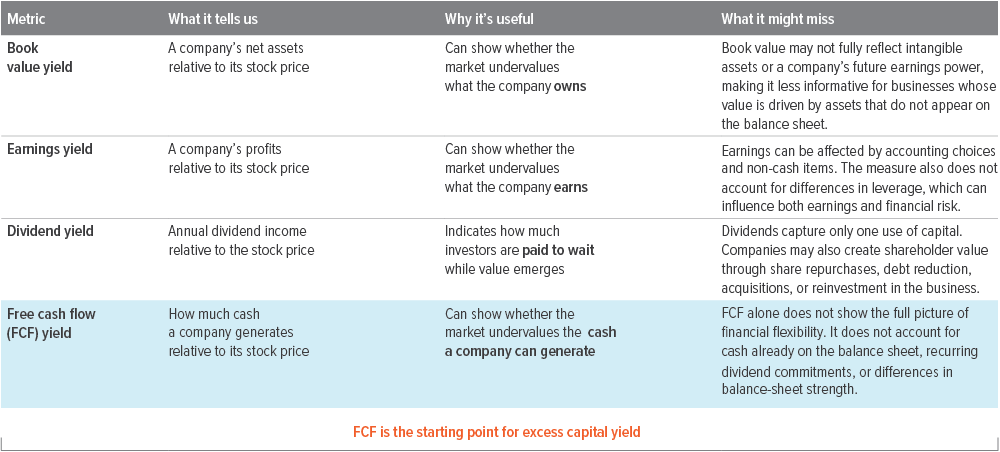
Of these traditional measures, we believe free cash flow yield provides the strongest foundation for assessing a company’s capacity to create additional shareholder value. But FCF alone does not capture the full extent of a company’s financial flexibility. That’s where excess capital yield comes in.
Excess capital yield: A more complete measure of value
Excess capital yield (ECY) builds on the foundation of FCF by adjusting the metric to capture additional sources of financial flexibility and value creation.
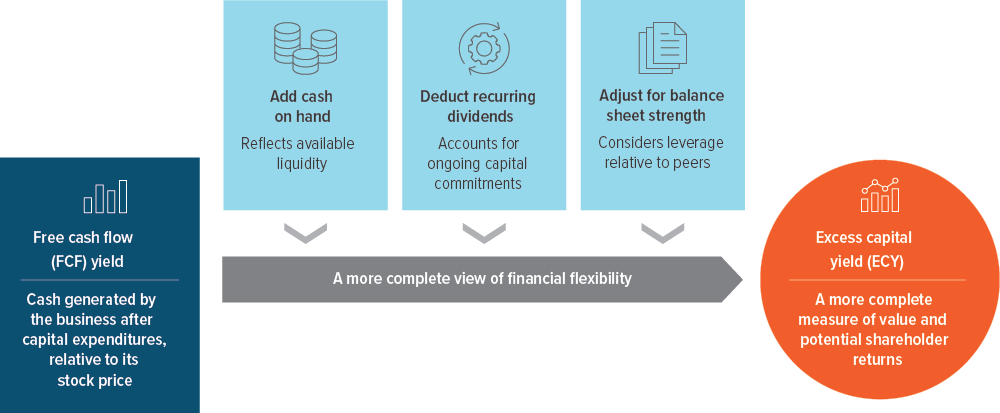
Importantly, this calculation combines data from all three financial statements and reduces reliance on potentially distorted earnings measures. The result is a clearer view of the “dry powder” available to a company to supplement value creation through dividend growth, share repurchases, accretive M&A, and organic investment
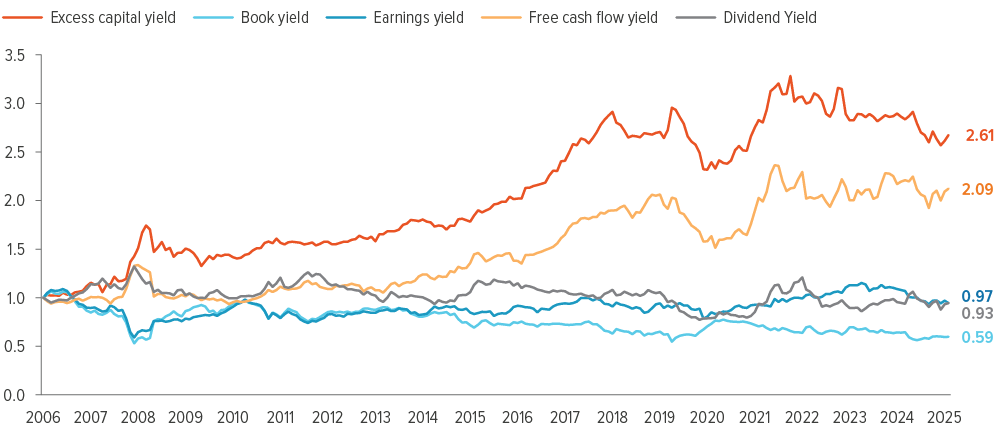
As of 12/31/25. Source: FactSet. Returns reflect the spread between the lowest quintile and the highest quintile of the respective factor of the Russell 1000 Value Index (exfinancials, REITs, and utilities) from 01/07 through 12/25. Past performance is no guarantee of future results.
Historically, ECY has differentiated itself from traditional valuation measures by looking beyond price to incorporate a company’s financial flexibility. By accounting for the capital companies have available to deploy, ECY can provide a more complete view of their capacity to enhance shareholder value over time.